
The brief Read aloud by the marshal
Before Pat read dirt for a living, he was a Melbourne Uni chemistry kid.
You’ve got vinegar, bicarb soda, and four colours to hit on the testing wheel.
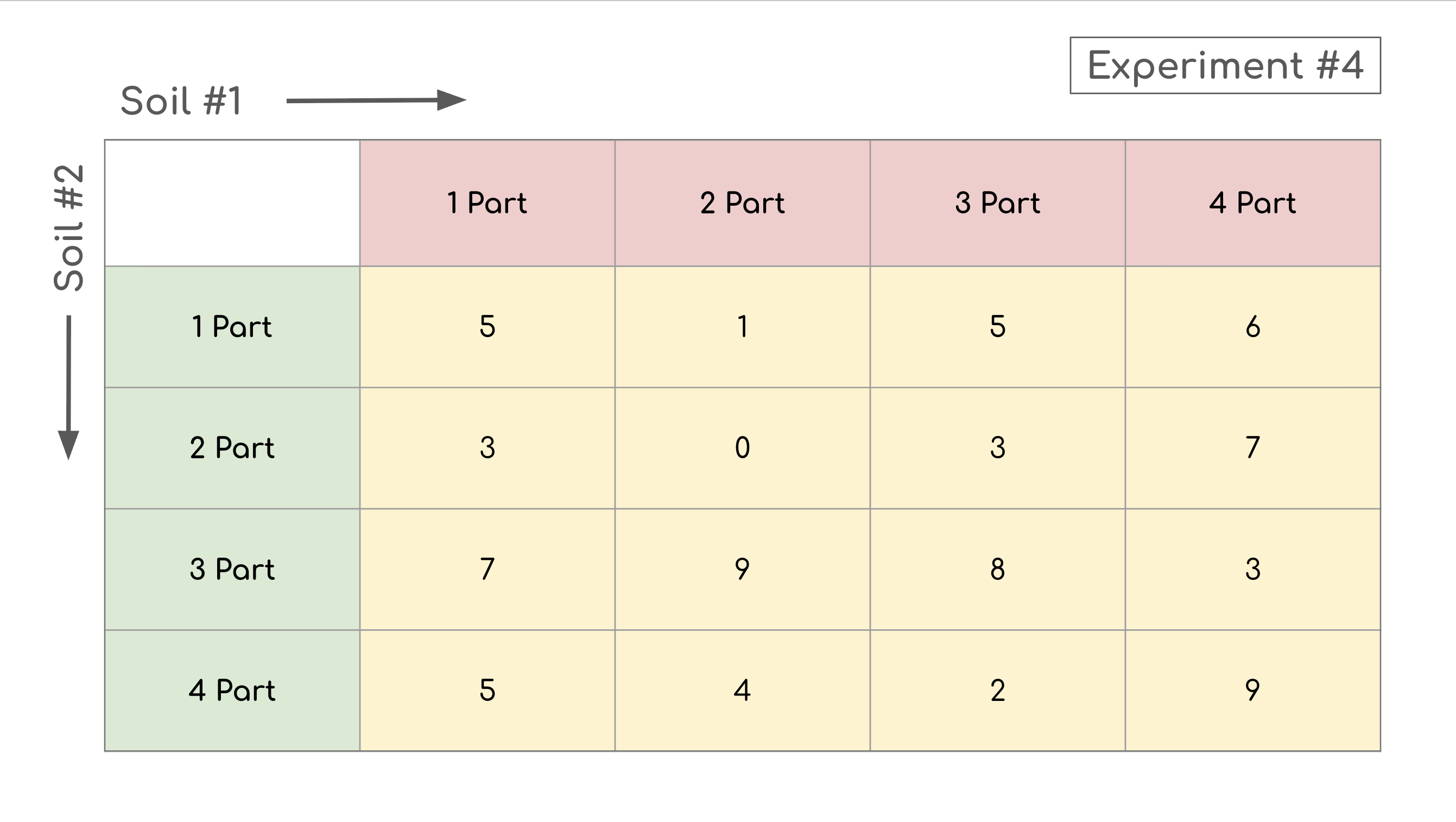
Mix by ratio — vinegar in drops, bicarb in scoops. Test it. Match the target colour. Each experiment has a grid — powder across, drops down. Land on the right cell and you’ll find a number.
Four experiments. Four numbers. One lock. Crack the code. Open the box.
How it cracks Four experiments · one code
Vinegar drops + bicarb scoops, counted to the grid axes.
Indicator, barium dust, match the target on the colour wheel.
Your powder × drops cell holds the experiment’s number.
Four numbers, experiment order. Lock opens or it doesn’t.
The grid & the lock One grid per experiment · four-number code
Ratio grid · sample
The 4-code lock
Enter in experiment order — Experiment 1 → 2 → 3 → 4.
Lock opens? Text a photo of the open padlock to Matt — 0425 497 690 — that’s how the points get banked.
Example · One experiment grid
Method Per colour · repeat four times
The testing kit Manutec soil pH kit · six steps
Materials & targets Four swatches · four grids · one lock
Vinegar · The acid
Counted in drops — steps of 10 on the grid
Bicarb soda · The base
Counted in scoops — 1/128 tsp per grid step
Four target swatches
- Manutec soil pH kit — indicator liquid, barium puffer + colour wheel
- 4 ratio grids — bicarb scoops × vinegar drops, numbers in cells
- 4-number lock — digits in experiment order
- Locked box — holds the next clue / QR
- Paint palettes — disposable · one well per test
- Dropper + 1/128 tsp scoop — 1 unit = 1 grid step
- Cleaning equipment — wash gear between tests · leave it clean
Lab rules Marshal has the key
Use only the vinegar, bicarb, kit, palettes, swatches, and grids provided.
Mix whole units that map to the grid axes — 10-drop steps, 1/128 tsp scoops. Don’t contaminate the source bottles.
Record the number from the cell that matches your ratio — not the closest-looking one.
No phones for pH charts, colour pickers, or reverse-looking up the code.
Enter the four numbers on the lock in experiment order (1 → 2 → 3 → 4).
Wrong code: lock stays shut. Keep mixing. Don’t force it or swap grids.
Clean palettes and gear with the cleaning equipment when you’re done — leave the station cleaner than you found it.
Marshal may say “close enough” on colour — but the number is still the one in your claimed cell.